Titanic Museum Attraction, Pigeon Forge TN
April 5-6, 2022
April 5-6, 2022
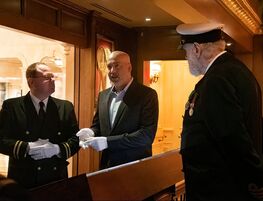
On Monday, April 4th, David H. Kurzman and Joan Adler traveled to Pigeon Forge, TN to participate in a very special event. David is SHS’s board chair and the great, great grandson of Isidor and Ida Straus. David’s father, Paul A. Kurzman, is the owner of a very special locket that was found on Isidor Straus’ body when it was recovered after Titanic’s sinking. He has never lent it for exhibition – until now.
Titanic Museum Attraction (TMA) in Pigeon Forge, TN and Branson, MO are venues where the great ship has been recreated in three quarter scale. Several of SHS’s artifacts are on loan to TMA. Isidor’s wedding band is on display in Isidor and Ida’s recreated first class sitting room. Many photographs adorn the walls in the same area and several are framed and placed on the furniture in the sitting room. The museum requested Paul Kurzman to lend his locket for this special exhibition. This time, Paul agreed. And so, on April 4th, David Kurzman and I traveled to Pigeon Forge to participate in the ceremony created around the installation of the locket.
Learn more about this wonderful event in the August 2022 Newsletter.
Titanic Museum Attraction (TMA) in Pigeon Forge, TN and Branson, MO are venues where the great ship has been recreated in three quarter scale. Several of SHS’s artifacts are on loan to TMA. Isidor’s wedding band is on display in Isidor and Ida’s recreated first class sitting room. Many photographs adorn the walls in the same area and several are framed and placed on the furniture in the sitting room. The museum requested Paul Kurzman to lend his locket for this special exhibition. This time, Paul agreed. And so, on April 4th, David Kurzman and I traveled to Pigeon Forge to participate in the ceremony created around the installation of the locket.
Learn more about this wonderful event in the August 2022 Newsletter.